
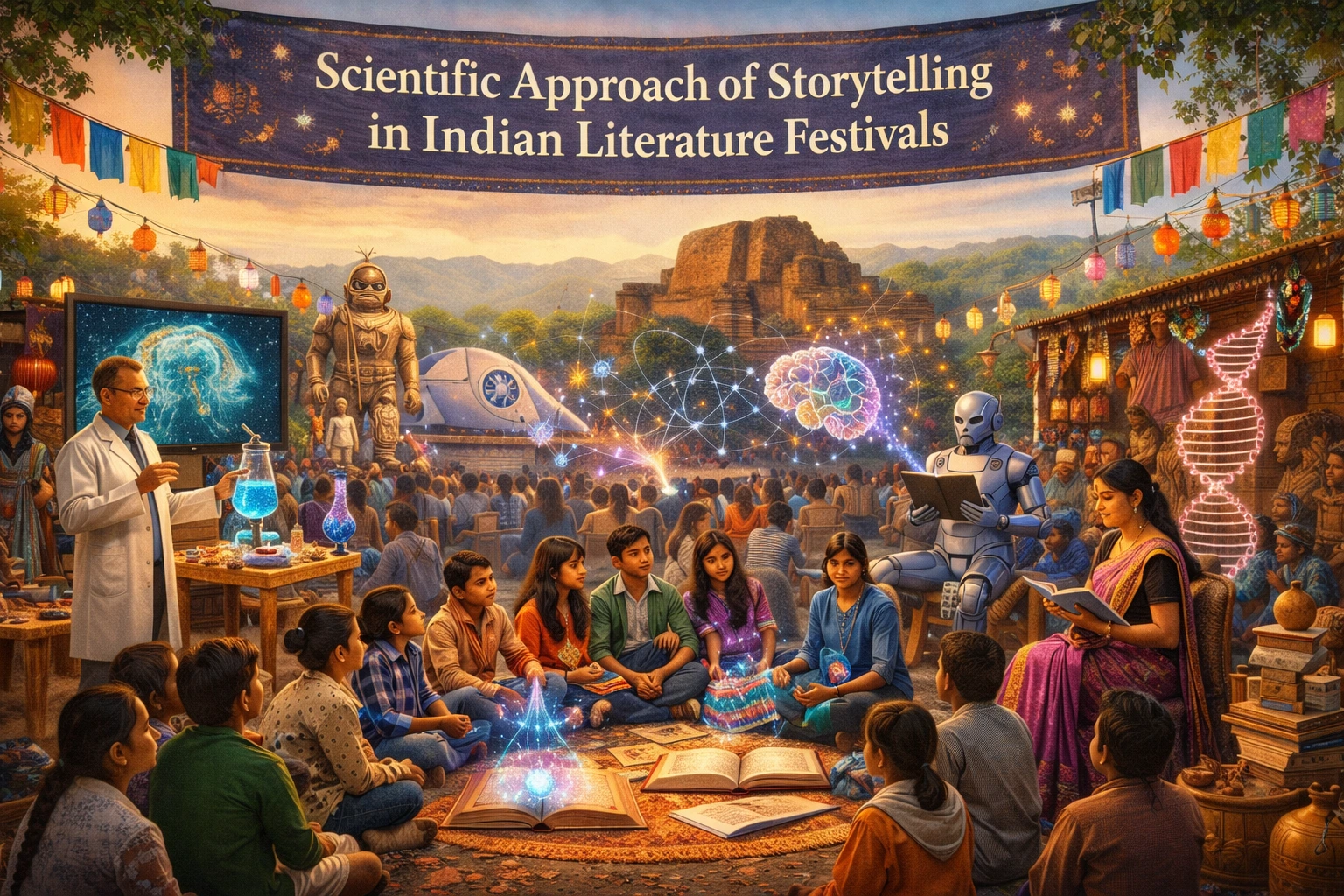
Sometimes it always fascinates us how the stories which were told to us are remembered from generation to generation. Storytelling is a practice which is embedded very deep into Indian folk culture, thus promoting our oral lore heritage. But beyond this and many other advantages of storytelling, one resides in the dominance of a scientific approach — which is to sharpen our brain memory and enable better functioning of our neurons.
Signy Sheldon from McGill University published their paper in the Journal of Neuroscience, under which they state that storytelling alters our way of storing data in our minds depending on how the story is being told. The more precise the story is in its vocabulary, practical places and situations, and intricate details that provide quick reflexes to our neurons, the more reflective our memory becomes.
Stories, while they are being told or heard, ignite and arrange the lab of factual knowledge within our minds. That’s how, through storytelling, we become more precise, accurate, and unbidden.
Apart from this, there is also one Indianised idea related to morality or basic human values needed to sustain oneself within a society. Stories like Panchatantra, Baital Pachisi, Singhasan Battisi and even epics like Mahabharat and Ramayana have long been part of Indian children's literature, bridging the values of humanity and rectitude ethics.
Storytelling does not necessarily control our mind, but it does control the flow of ideas. Thus, it not only sharpens our memory but also makes us more reflexive with greater truthfulness. Stories, whether heard or told, leave a deep imprint of memories regarding people and places. The fact that we humans live more on memories than on neurons also strengthens this argument — that storytelling is an inevitable part of human life.
(0) Comments